

An 8% price increase on all corrugated board and other paper products was announced last week.
Whether your business is a small start-up or a well-established large company, packaging increases are difficult to absorb. If you are a manufacturer, the cost of raw materials usually trickles upwards, and they are literally just the cost of doing business. If you import the products you sell, price increases, shipping costs and tariffs are frequent and unavoidable. I have been doing this for a few decades, and I’ve noticed for some reason, packaging costs are particularly difficult to accept.
I believe that is because price increases, on boxes and packaging, are less frequent and always seem to come out of the blue with little or no justification. The paper market has been quiet for some time. The last increase on corrugated was in April 2025, so it has been over a year. The mills who make the paper that is used to make boxes, claim energy costs, combined with transportation costs, are especially forcing them to do this.
Avoiding or minimizing higher packaging costs.
We have met with thousands of customers and reviewed their packaging applications and usage. What we have learned in that process is that many if not most people are over paying for their boxes and packaging. That may sound like an auto insurance commercial, but the fact remains that most people do not understand how their box cost is calculated. The number of square inches of board used to make your boxes directly determines how much that box is going to cost. The fewer square inches, the lower the cost. The greater the number of square inches, the higher the cost.
There are several Related Links below sharing several ways to lower your cost, but the most obvious way to reduce your cost per box is to use less corrugated board. There are several ways to accomplish that including:
- Downsizing – how much excess space is there in your boxes when they are packed? Are your packers having to use ancillary packaging materials to help fill the void?
- Reducing board grade – for example, 32 ECT board uses less material compared to 200# test. Does your product truly require excessive protection? When was the last time your requirements were reviewed?
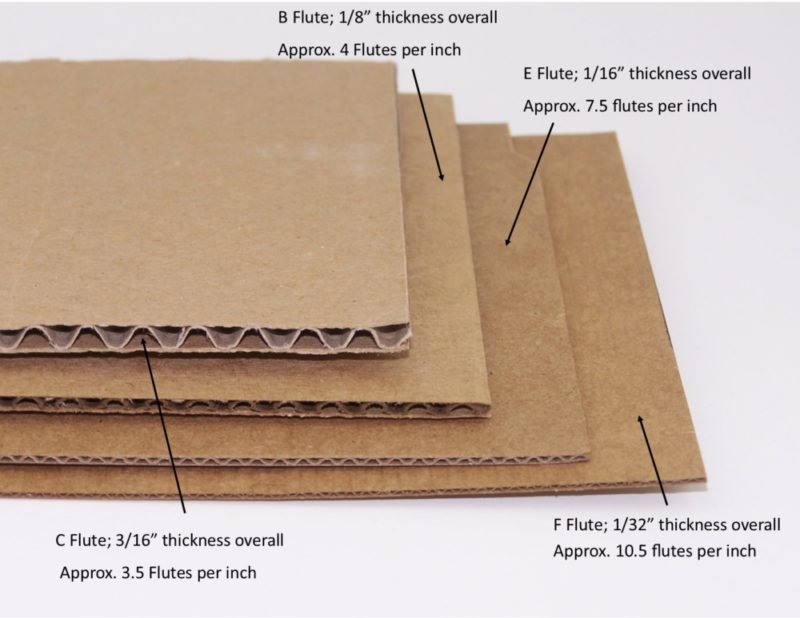
- Utilizing board with smaller fluting – for example, compared to B flute, E flute more than satisfies necessary protection for most products being shipped. Over one half (millions) of the DTC boxes we make are E-flute.
- Are you using the best TYPE of box design – With new in/out print capabilities, will RSC serve you better than die cut mailers that typically have a lot of trim or waste?
- Redesign your die cut mailer – all die cut shippers are not created equal. You pay for every square inch of corrugated, even if some of it ends up as production scrap. This is where we excel with design expertise that is focused on reducing corrugated usage.
We realize that any time you consider making a packaging change; you can quickly come up with several good reasons to avoid or postpone modifying the status quo. None of us can change the corrugated market and I hate to say there are rumblings of a second increase coming some time later this year. Whether or not that happens, it is good to have options and a plan to use less corrugated for economic and sustainability reasons.
Call us at 630-551-1700 or contact us via this link to speak to one of our non-commission, experienced design experts. We are confident we can provide you with the most effective and attractive shipping container at the lowest possible cost.
Related Posts:
https://www.salazarpackaging.com/5-packaging-services-for-cost-reduction/
https://www.salazarpackaging.com/how-a-good-packaging-design-can-reduce-your-3pl-costs/
https://www.salazarpackaging.com/expert-advice-to-help-reduce-your-dtc-packaging-costs/
https://www.salazarpackaging.com/the-high-cost-of-your-outdated-e-commerce-packaging-design/